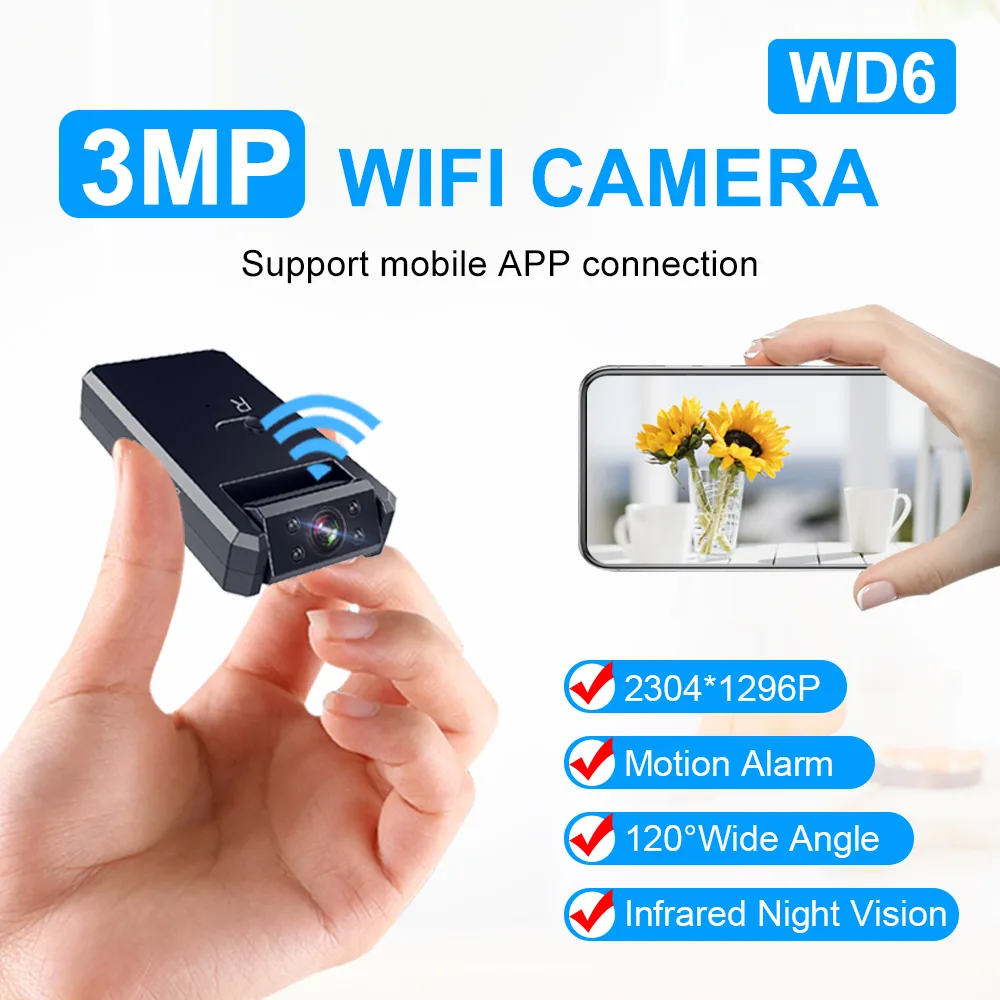
HD Wifi Camera Mini Battery Cam IPC
This palm-sized camera combines a rechargeable battery with built-in Wi-Fi, so it can keep watching where power outlets and cabling are out of reach. It suits temporary or mobile setups, and clips or mounts can be added to fit different surfaces. The battery, wireless link, and mini form factor are what set it apart from a fixed wired camera; runtime, resolution, and storage details are listed in the specifications.
Overview
A rechargeable cell inside the housing means the camera does not need to sit near a mains outlet or a PoE run. Placement is limited by Wi-Fi coverage rather than by where a cable can be pulled, which changes where the unit can realistically go: on a shelf, a wall bracket, a magnetic base, or a clip attached to a rack or cage. Because there is no permanent wiring, the camera can be repositioned as the monitored area changes, then returned to a charging point when the cell is depleted.
The Wi-Fi link carries both live view and recorded files. In practice this means the camera joins an existing access point or a phone hotspot rather than requiring a dedicated receiver, and live video is viewed on a phone or tablet through the companion app. Local storage on a microSD card keeps recording running when the network drops; the wireless path is used for viewing and for retrieving clips. Details of supported card capacity, resolution options, and frame rates are given in the specifications.
Physical design follows the mini format. A small body keeps the lens close to the mounting surface, which matters when the camera is tucked into a corner, placed behind glass, or attached to equipment where a full-size unit would obstruct. The lens and sensor assembly, the battery, and the radio share a compact envelope, so heat dissipation and antenna placement are the two constraints that shape the internal layout. An IR or low-light capability, where fitted, is what determines whether the camera is useful after dark; check the specifications for the illumination range and minimum lux.
Typical deployments include rented rooms or workspaces where drilling and cabling are not permitted, vehicles and trailers that need monitoring while parked, temporary sites such as construction or event spaces, and indoor positions where the nearest socket is inconvenient. It is also used as a secondary view alongside a fixed wired camera, covering an angle the permanent unit cannot reach.
Selection comes down to three questions: how long the camera must run between charges, how far it sits from the access point, and whether recording continues locally when the link fails. Battery capacity, wireless band, and storage behaviour in the specifications answer these. Mounting hardware, charging method, and app compatibility should be confirmed before ordering, since these vary between configurations.
Related
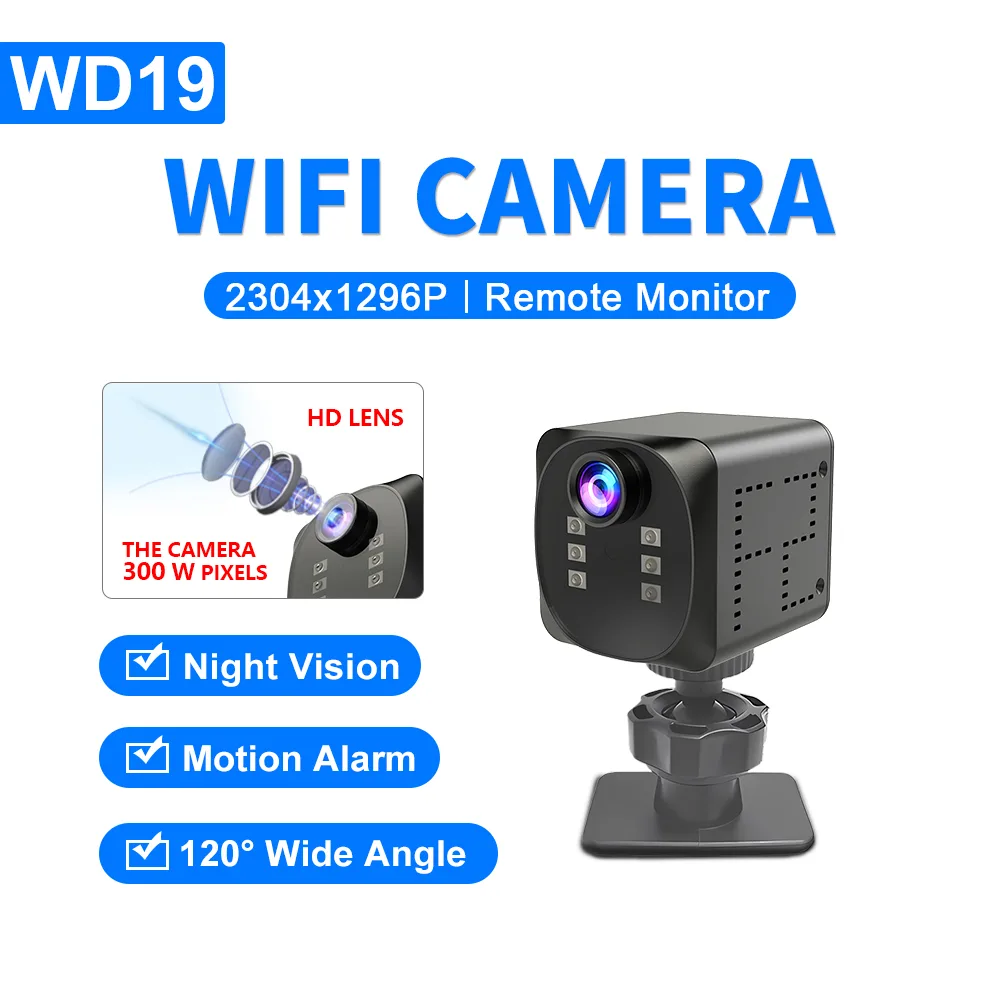
WD19 IP Camera HD Samrt WIFI Camera with 120° View and Night Vision
The WD19 is a compact black cube camera with a 120° wide-angle lens, 1080p recording, night vision, and motion alerts, backed by a 1400mAh battery for wire-free placement. It records to a TF card with loop recording and supports remote viewing and sharing from a phone, so you can watch a room, a pet, or an entryway without running cables.
View more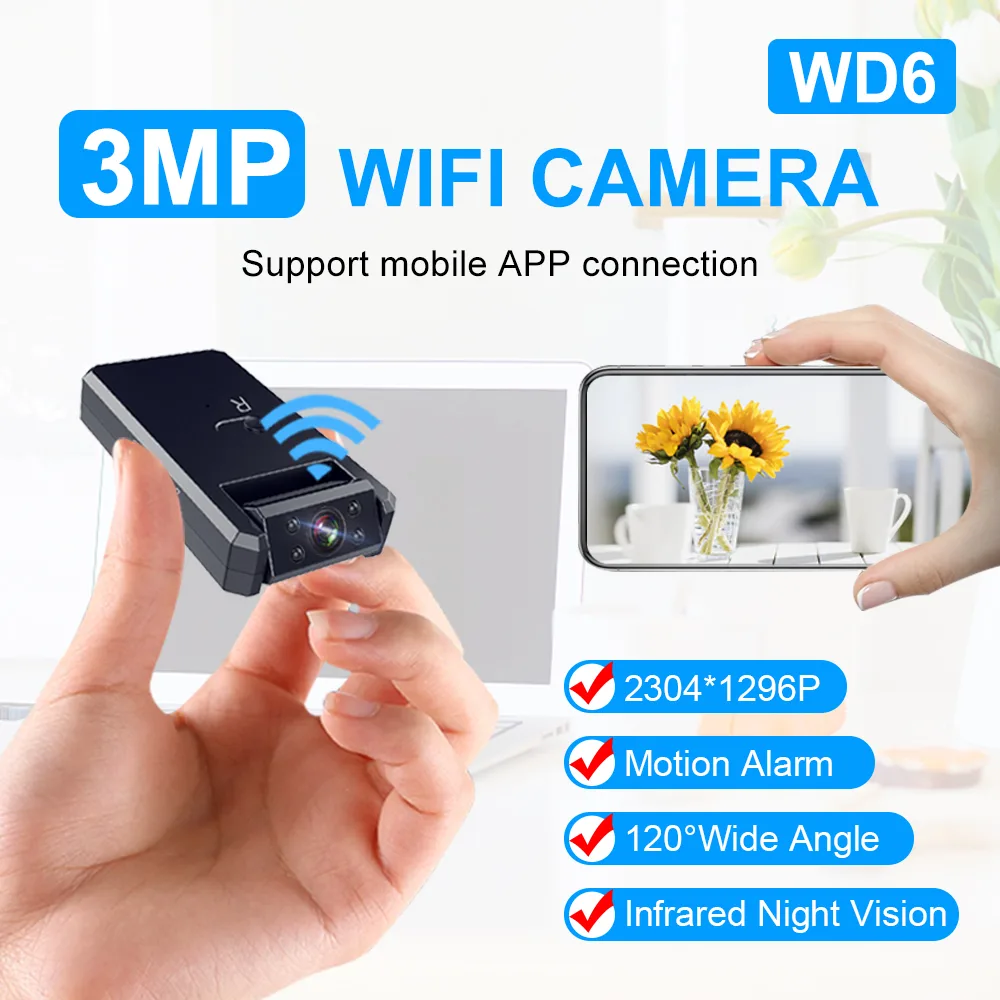
WD6 3MP WiFi Mini Battery IP Camera with 180-Degree Rotating Lens and IR Night Vision for OEM Customization
The WD6 is a palm-sized 3MP WiFi camera whose lens module rotates 180 degrees, letting one unit cover angles a fixed mini cam cannot. It handles indoor and outdoor remote viewing through a mobile app, with 2304x1296P capture, 120-degree wide angle, infrared night vision, motion alarm, and sound detection. Small-batch OEM orders are accepted, so buyers can adapt it to their own brand and specs.
View more