WD19 Mini Battery IP Camera 3MP HD Cam Indoor
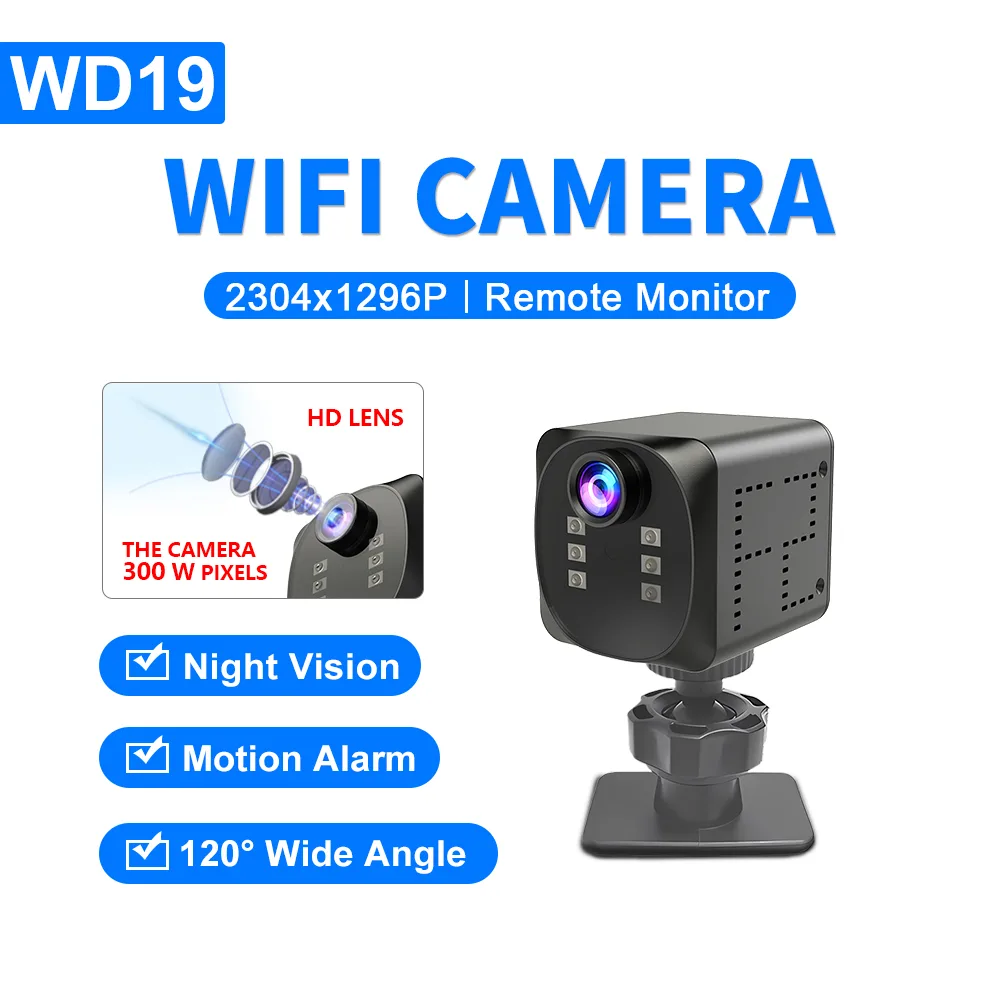
This article introduces a compact battery-powered IP camera built for flexible placement where wired power is impractical, and explains how its mini form factor affects mounting, coverage, and everyday use. It highlights the trade-offs that come with battery operation, such as standby power management and recording triggers, so buyers can judge whether this type of camera suits their site. Specifications are covered separately in the spec sheet.
The WD19 is a battery-operated IP camera built around a deliberately small housing. Because there is no power cable to run, the camera can be placed where a wired unit would require conduit, an electrician, or a hole through a wall — a rented apartment, a shed, a garage corner, a shop counter, or a doorway that has no nearby outlet. The trade-off is that the battery has to be managed, and the camera's behaviour is shaped by that constraint.
Product characteristics
The defining feature is the mini form factor. A smaller body takes up less visual space on a wall or shelf, which matters in interiors where a full-size camera would be conspicuous. It also means less mounting hardware and a lighter load on the surface it is fixed to, so drywall, wood, and thin panels are all viable. The battery removes the cable, not the need for a stable mount — the camera still has to be aimed and tightened so that vibration or wind does not shift the field of view.
Because power is finite, the WD19 does not run continuously the way a mains-powered camera does. It relies on standby power management and event-based recording: the camera stays in a low-consumption state and wakes when a trigger occurs. This design keeps battery life usable but changes what the footage looks like. Buyers should expect clips tied to events rather than an unbroken timeline, and should plan storage and review around that.
Technical parameters
Detailed figures for resolution, field of view, battery capacity, standby and recording current, wireless band, storage media, and operating temperature are listed in the specification sheet. Two parameters deserve attention during selection. First, standby current determines how long the camera lasts between charges in a quiet location; recording current determines how quickly it drains in a busy one. Second, the trigger threshold and sensitivity settings determine how many clips are captured — set too high, and events are missed; set too low, and the battery is consumed by footage of moving branches.
Applications
The WD19 suits sites where wiring is impractical or unwanted. Examples include rental units where drilling and conduit are restricted, storage rooms and garages without outlets, temporary sites such as market stalls or construction offices, and secondary viewpoints that supplement a wired system covering a main entrance. It is less suitable where continuous, uninterrupted recording is required, or where the camera must run for months without access for charging.
Selection advice
Before choosing this type of camera, confirm three things: whether event-triggered clips meet your evidentiary or monitoring needs, whether you can physically reach the camera to recharge or swap batteries, and whether the mounting surface can hold the camera at the angle you need. If the answer to any of these is no, a wired camera is the better fit. If all three are yes, the WD19's combination of small size and cable-free installation is the reason to choose it.
Related
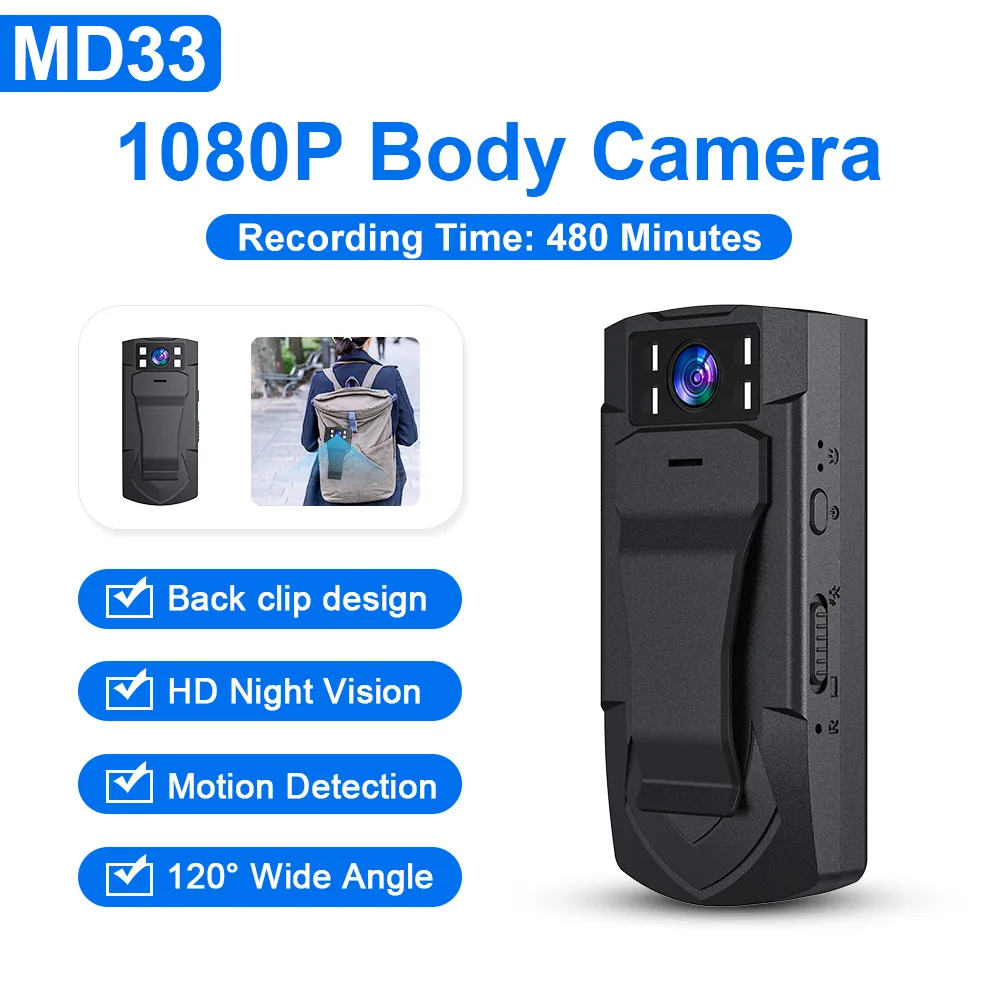
1080P Body Camera for Wearable Recording
This overview examines a wearable 1080P body recorder built for hands-free capture during patrols, inspections, and other field work, where a phone or handheld camera is impractical. It walks through what matters when choosing one: mounting options, battery and storage behavior during long shifts, low-light performance, and how footage is offloaded and secured after a session.
Read more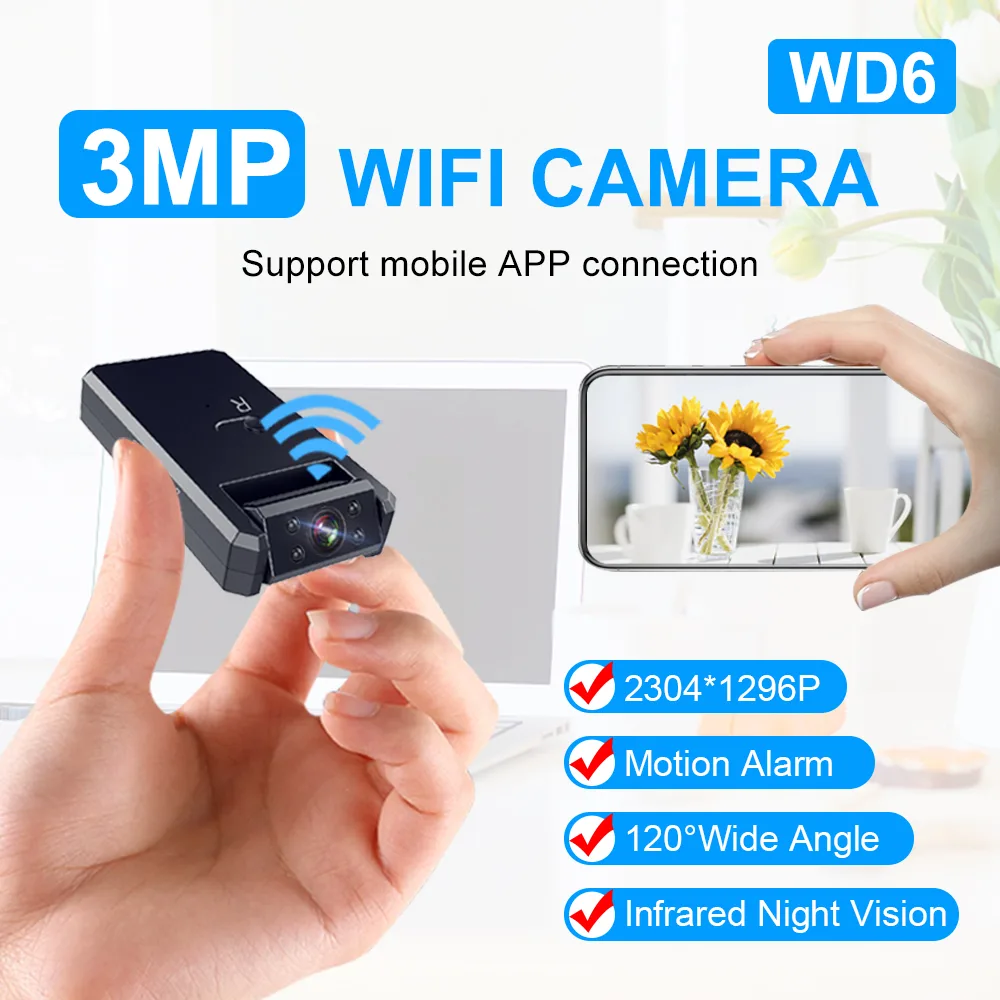
WD6 HD WiFi Camera IPC Mini Battery Cam for OEM and Small-Batch Orders
The WD6 HD WiFi camera is a compact battery-powered IP camera aimed at buyers who need flexible order volumes rather than container-scale runs. It addresses the common problem of sourcing mini cameras when your quantity is too small for most factories, and it can be customized under your own brand. The key point worth noting is the combination of small-batch acceptance with OEM support.
Read more